Roof Ventilation in Clarksville, TN
By Marcus A. Trent · Updated 2026 · Roofing Guide
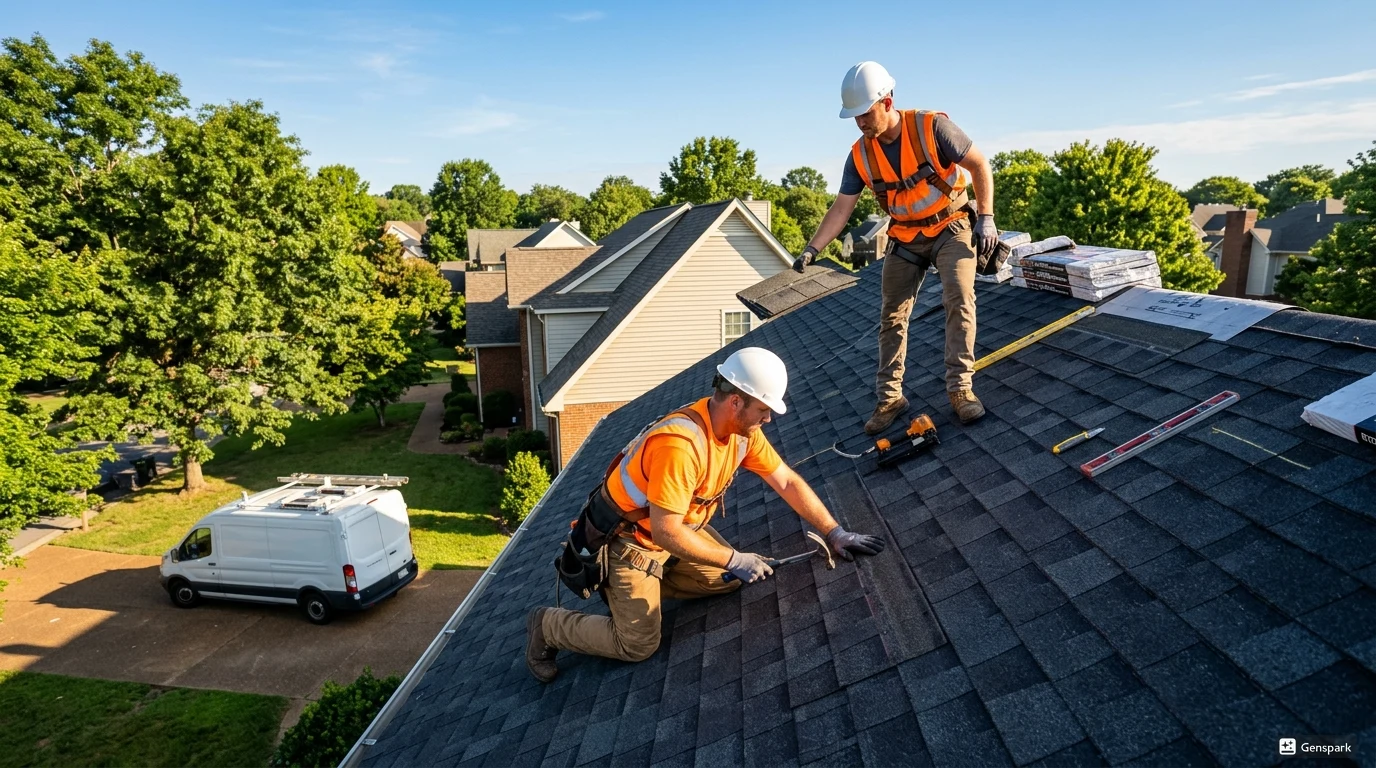
Your roof needs to breathe. Sounds strange, but it is true. Without proper ventilation, your attic turns into an oven in summer and an icebox in winter. That cooks your shingles from below. It causes ice dams. It rots your decking. It wastes energy. And most Clarksville homes do not have enough ventilation.
We have been xing roof ventilation in Clarksville since 2003. We have seen attics hit 150 degrees in July because the builder skipped ridge vents. We have seen ice dams destroy gutters because the so ts were painted shut. Proper ventilation is not optional. It is critical.
This article covers roof ventilation in Clarksville. What works. What does not. And how to tell if your roof is suffocating. Call (931) 666-1469 for a free ventilation inspection.
The Ventilation Problem in Clarksville Homes
Here is the science. Hot air rises. In summer, your attic heats up. The shingles absorb solar radiation. That heat transfers to the attic. Without ventilation, the hot air sits there. It gets hotter. Your shingles are exposed to high heat from above and below. They age twice as fast.
An asphalt shingle roof that should last 18 years might only last 12.
In winter, the opposite happens. Warm, moist air from your living space rises into the attic. It hits the cold roof deck. It condenses. That moisture wets the insulation. It rots the decking. It grows mold. And it freezes. Ice dams form at the eaves. Water backs up under shingles. Leaks happen.
The solution is balanced ventilation. Intake vents at the so ts (the underside of your eaves).
Exhaust vents at the ridge (the peak of your roof). Air ows in through the so ts, up along the underside of the roof deck, and out through the ridge. This removes heat and moisture.
Most Clarksville homes have inadequate ventilation. Builders install a few box vents (also called turtle vents) and call it done. Box vents are better than nothing, but they do not provide uniform air ow. The ridge is the most effective exhaust point. We install ridge vents on almost every roof replacement we do.
Fort Campbell homes often have no ridge vents. Many were built with gable vents only. Gable vents are worse than box vents. They short-circuit the air ow. They pull air from one gable to the other, bypassing the so ts. The roof deck gets no air ow. We have added ridge vents to dozens of base homes.
How We Add or Improve Roof Ventilation (Step by Step)
We can add ventilation to an existing roof without a full replacement. Here is how.
meter. We measure the temperature difference between the attic and outside. We check for moisture stains. We count existing vents.
- We calculate your ventilation needs. The code requires 1 square foot of net free
ventilation for every 300 square feet of attic floor space. Half intake. Half exhaust. We do the math for your home.
- We check your so ts. Are they blocked by insulation? Are they painted shut? Are there
even so t vents at all? Many homes have solid so ts with no vents. We recommend adding continuous so t vents.
- We recommend the best solution. For most homes, a continuous ridge vent plus
continuous so t vents is ideal. For homes with no ridge (hipped roofs), we use a combination of box vents or power vents.
- We cut the ridge vent. If you have a ridge and it is not already vented, we cut a 2-inch slot
along the peak of your roof. We install a continuous ridge vent over the slot. The vent is covered with shingles so it blends in.
- We add so t vents. If your so ts are solid, we cut holes and install round or continuous
so t vents. We make sure the attic insulation has baffles so it does not block the air ow.
the holes when we install the ridge vent. Or we can leave them as extra exhaust.
air ow. We measure temperature again. If the attic is significantly cooler, the system works.
Ventilation is a roofing job. It involves cutting holes in your roof and flashing them properly. A handyman or an insulation company might not know how to ash a ridge vent so it does not leak. We do. Ridge vents are designed to shed water while allowing air to pass. Install them wrong, and you have a leak.
We also know Montgomery County code. The 2018 IRC requires ventilation for all attic spaces.
The specific requirements depend on the roof pitch and insulation type. We follow the code.
We pull permits if needed.
For Fort Campbell families, adding ventilation can extend the life of a roof that is otherwise in good shape. If your roof is ten years old but has no ridge vent, adding one can give you another ve to seven years. That is cheaper than a full replacement.
Frequently Asked Questions
How much does roof ventilation cost in Clarksville?
Continuous ridge vent installation runs priced competitively to available upon request depending on roof length. So t vent installation runs varies to priced competitively for continuous, available upon request to varies for round vents. Power attic fans run priced competitively to available upon request installed. A full ventilation upgrade for an average home runs varies to varies based on scope and materials.
How do I know if my roof has bad ventilation?
In summer, your attic feels like a sauna. Your shingles are curling or losing granules prematurely. Your energy bills are high. In winter, you see ice dams or condensation on the underside of the roof deck. You have mold or mildew in the attic. Any of these means call us.
What is better: ridge vents or power vents?
Ridge vents. They are passive (no moving parts). They never break. They provide uniform air ow. Power vents use electricity. They can fail. They can also depressurize your attic and pull conditioned air from your living space. Ridge vents are the gold standard.
Can I have too much roof ventilation?
No. But you can have unbalanced ventilation. If you have exhaust vents without intake vents, the exhaust will pull air from your living space, not from the so ts. That is bad. Intake and exhaust must be balanced.
Will adding ventilation lower my energy bills?
Yes. A properly ventilated attic can reduce cooling costs by 10 to 15 percent in summer. In winter, it reduces ice dams and moisture problems. The payback period for ventilation upgrades is usually two to four years.
Do I need ventilation if I have a metal roof?
Yes. Metal roofs get even hotter than asphalt in direct sun. The underside of the metal can hit 170 degrees. That heat radiates into your attic. Ventilation is critical for metal roofs. We always install ridge vents with metal roof installations.
Ready for a free estimate from a licensed Clarksville roofer?
Call (931) 666-1469