Summer Heat Roof Damage in Clarksville, TN
By Marcus A. Trent · Updated 2026 · Roofing Guide
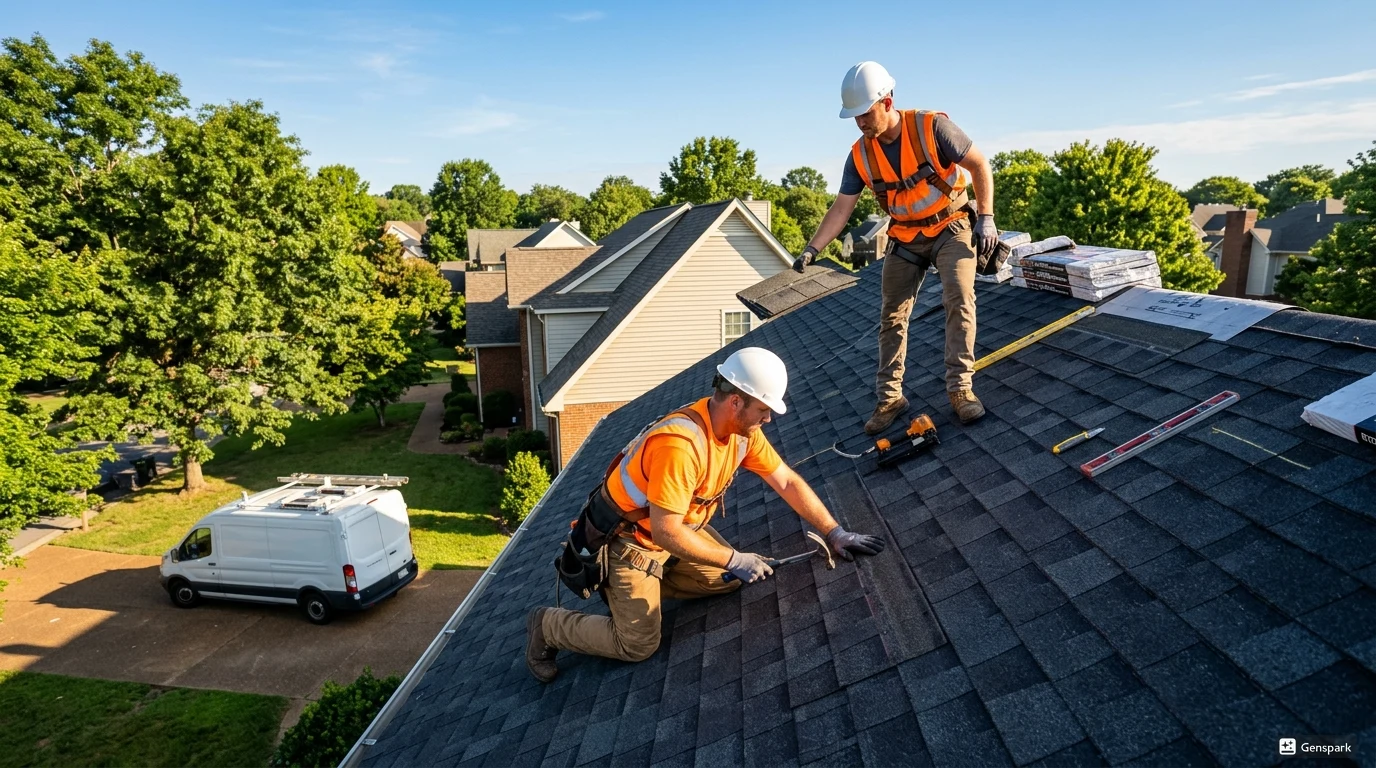
Summer in Clarksville is brutal. 95 degrees. High humidity. Intense sun. Your roof takes a beating every single day. The surface temperature of a dark shingle can hit 160 degrees. That softens the asphalt. It accelerates aging. It shortens the life of your roof.
We have been repairing summer heat damage in Clarksville since 2003. We know what happens to shingles when they bake. They curl. They crack. They lose granules. The selfadhesive seal fails. Shingles lift in wind.
This article covers summer heat roof damage. How heat affects shingles. What to look for. And what to do. Call (931) 666-1469 for a free inspection.
How Summer Heat Damages Clarksville Roofs
Let us start with the science. Asphalt shingles absorb solar radiation. On a 95-degree day, the surface temperature of a dark shingle can hit 160 degrees. That heat softens the asphalt. The shingle becomes pliable. When the shingle cools at night, it hardens. This cycle repeats every day. Over time, the asphalt becomes brittle. It cracks. It curls. It loses granules.
South and west-facing slopes get the worst of it. They are exposed to the afternoon sun, when the sun is highest and hottest. Those shingles may fail ve years earlier than north-facing slopes. We have seen homes o Tiny Town Road where the south slope was bald and cracked, but the north slope still had granules.
Heat also accelerates the breakdown of the self-adhesive seal. Shingles are supposed to stick to the one below them. Heat causes the adhesive to soften and ow. Over time, it fails. The shingles lift. Wind can then get under them. We see this on roofs that are 12-15 years old.
Underlayment also degrades. Felt paper (tar paper) becomes brittle and tears. Synthetic underlayment holds up better, but even it degrades over time. We have seen 20-year-old synthetic underlayment that was still intact.
Attic ventilation is critical. A poorly ventilated attic can hit 150 degrees. That heat cooks the shingles from below. Shingles age twice as fast. We have measured attics in Clarksville that were 140 degrees when it was 95 outside. Adding ridge vents dropped the temperature to 110 degrees.
Fort Campbell families, base housing roofs are exposed to the same heat. We inspect for heat damage every summer. The housing office schedules replacements based on heat exposure.
How We Fix Summer Heat Damage (Step by Step)
- Inspection. We look for curling shingles (edges lifted up), cracking shingles (small splits),
and granule loss. We also measure attic temperature with a laser thermometer.
outside. If it is more than 20 degrees above outside, ventilation is poor. We check so t vents for blockage. We check ridge vents for clogging.
- Ventilation improvement. We add ridge vents (if none exist). We add so t vents (if
blocked or missing). We install baffles to keep insulation from blocking so t vents. Cost is priced competitively to available upon request.
- Shingle replacement. Curled or cracked shingles are replaced. If widespread (more than
20% of a slope), we recommend replacing that slope. Cost is varies to priced competitively for a few shingles, available upon request to varies based on scope and materials for a slope.
- Color recommendation. If you are replacing your roof, we recommend light-colored
shingles. They reflect heat and stay cooler. A white shingle can be 20 degrees cooler than a black one.
- Cool-roof options. Metal roofing or cool-roof shingles (reflective coatings) can reduce
heat absorption. We can quote these.
We understand the science. We know which materials resist heat. We also know how to improve ventilation to extend shingle life. A priced competitively ventilation upgrade can add 3-5 years to a roof.
We do not just replace shingles. We fix the root cause. Poor ventilation. Wrong color. Wrong material.
For Fort Campbell families, we offer summer inspections to catch heat damage early. A small repair now prevents a full replacement later.
Frequently Asked Questions
What temperature is too hot for a roof?
Asphalt shingles can handle up to 160 degrees. But repeated high temperatures shorten lifespan. Ideally, keep attic temperature below 130 degrees. If your attic is over 140 degrees, you have a problem.
Do light-colored shingles really make a difference?
Yes. A white shingle can be 20 degrees cooler than a black shingle. That extends life and lowers AC costs. In Clarksville's summer, the difference is significant.
Can I walk on my roof in summer?
Avoid it. The shingles are soft. You can damage them (scu granules, break seals). If you must walk, do it in the morning before it heats up. Wear soft-soled shoes.
How can I cool my attic without replacing my roof?
Add ridge vents and so t vents. Install a power attic fan (solar powered). Add radiant barrier foil to the underside of the rafters. Improve attic insulation (keeps heat from living space out of attic).
Does summer heat cause roof leaks?
Indirectly. Heat causes shingles to crack and curl. Those cracks lead to leaks. The heat itself does not leak, but the damage it causes does. A cracked shingle from heat will leak in the next rain.
How much does attic ventilation improvement cost?
Ridge vent installation: available upon request to varies. So t vents: priced competitively to available upon request. Power fan: varies to priced competitively. Radiant barrier: available upon request to depends on your specific roof. Worth it to extend roof life.
Ready for a free estimate from a licensed Clarksville roofer?
Call (931) 666-1469