Chimney Flashing Repair in Clarksville, TN
By Marcus A. Trent · Updated 2026 · Roofing Guide
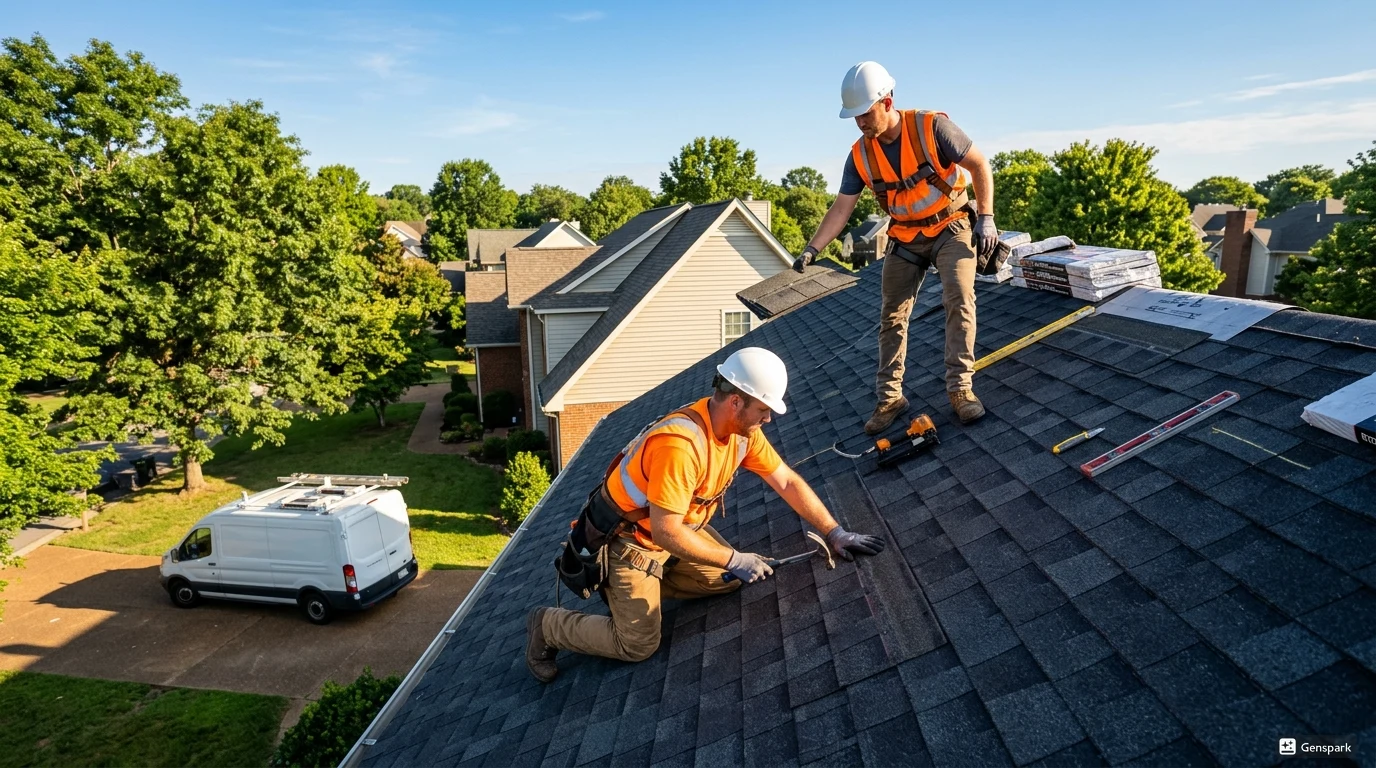
Chimney leaks are frustrating. You see water on your replace hearth. Or a stain on the ceiling near the chimney. You look outside. The chimney looks ne. But water is getting in somewhere.
And it is probably the flashing.
We have been xing chimney flashing in Clarksville since 2003. Older homes near downtown.
Newer homes with prefab replaces. Even commercial buildings with industrial chimneys. The problem is almost always the same: the metal that seals the gap between the chimney and the roof has failed.
This article covers chimney flashing repair. How to spot a leak. What the repair costs. And why you should never let anyone just smear caulk on it. Call (931) 666-1469 for a free estimate.
How Chimney Flashing Fails in Clarksville
Let us explain how chimney flashing is supposed to work. There are two layers. Base flashing goes under the shingles. Counter- flashing goes over the base flashing and is embedded into the mortar joints of the chimney. Water runs down the chimney, hits the counter- flashing, and is directed onto the roof, not behind the flashing.
Over time, the mortar cracks. The counter- flashing loosens. Water gets behind it. Then it runs down the base flashing, which might also have lifted. Then it drips onto your decking. Then it rots the wood. Then it stains your ceiling.
Clarksville's freeze-thaw cycles make this worse. Water gets into tiny cracks in the mortar. It freezes. It expands. The cracks get bigger. More water gets in. The flashing loosens further. We see this every spring after a winter with multiple ice storms.
Fort Campbell homes with prefab chimneys (metal) have different issues. The flashing on prefab chimneys is usually a metal collar that clamps around the pipe. The rubber gasket inside the collar dries out. The clamp loosens. We replace the entire collar kit. Cost is about priced competitively in materials.
How We Repair Chimney Flashing (Step by Step)
This is detailed work. Here is our process.
flashing, rust stains, and white e orescence. We also inspect the attic near the chimney for water stains.
- We remove the old flashing. We pull back shingles around the chimney. We remove the
old counter- flashing. We grind out the old mortar if it is embedded. We remove all old caulk and sealant.
- We inspect the decking and framing. If water has been leaking for a while, the decking
around the chimney might be rotted. We replace it. We also check the chimney cricket (a small roof built behind the chimney to divert water). If it is rotted or missing, we build a new one.
- We fabricate new base flashing. We bend aluminum coil stock to t the chimney base.
The base flashing goes under the shingles and up the side of the chimney.
slide the counter- flashing into the groove. We seal the groove with urethane mortar repair. We also screw the counter- flashing to the chimney with masonry screws.
- We install new shingles over the base flashing. We weave them in with the existing
shingles. We nail carefully so we do not puncture the flashing.
stays exible. It is rated for 30 years. We apply it to all seams and corners.
attic watches for water. No drips? Good. The repair is done.
Masonry chimneys are tricky. Cut the counter- flashing groove too deep and you weaken the chimney. Cut it too shallow and the flashing pulls out. Use the wrong sealant and it fails in a year. We have the tools and the experience to do it right.
Also, we can spot related problems. A leaking chimney is often a sign of a missing or inadequate cricket. A cricket is a small peaked structure built behind the chimney to divert water around it. Without a cricket, water and snow pile up behind the chimney. It rots the decking. We build crickets as part of the flashing repair when needed.
Another common problem: someone used caulk instead of proper flashing. Maybe a previous homeowner or a handyman. They smeared a bead of silicone or roofing cement around the chimney base. It worked for a few months. Then it cracked. Now water is pouring in. Caulk is not a permanent solution. Flashing is.
For Fort Campbell families, chimney flashing repair is a common wintertime call. Ice dams form behind chimneys. Water backs up. We have done dozens of these repairs on base housing.
The housing office knows our work.
Frequently Asked Questions
How much does chimney flashing repair cost in Clarksville?
available upon request to varies for a standard chimney. That includes removal of old flashing, new base and counter- flashing, sealing, and testing. If we nd rotted decking, add priced competitively to available upon request per sheet. If we need to build a cricket, add varies to priced competitively.
Can I just caulk my chimney to stop the leak?
You can. But it will fail. Caulk is not designed for the expansion and contraction of a chimney. It cracks. Water gets in. You end up calling us anyway. Save the money and do it right the first time.
How do I know if my chimney flashing is leaking?
Water on the replace hearth. Water stains on the ceiling near the chimney. E orescence (white powder) on the bricks. Rust stains below the flashing. A musty smell in the attic near the chimney. Any of these means call us.
How long does chimney flashing last?
Copper flashing lasts 50+ years. Aluminum lasts 20 to 30 years. Galvanized steel lasts 15 to 25 years. The mortar joints need repointing every 20 to 30 years. When you repoint, you should also replace the counter- flashing.
Do I need a permit for chimney flashing repair?
Minor flashing repair (replacing the counter- flashing only) usually does not require a permit. Full replacement including base flashing and decking repair requires a permit in Montgomery County. We pull the permit.
Can you fix a leak on a prefab metal chimney?
Yes. Prefab chimneys have a metal flashing collar. The rubber gasket dries out. We replace the entire collar kit. Cost is available upon request to varies depending on the brand and size.
Ready for a free estimate from a licensed Clarksville roofer?
Call (931) 666-1469