Sagging Roof Repair in Clarksville, TN
By Marcus A. Trent · Updated 2026 · Roofing Guide
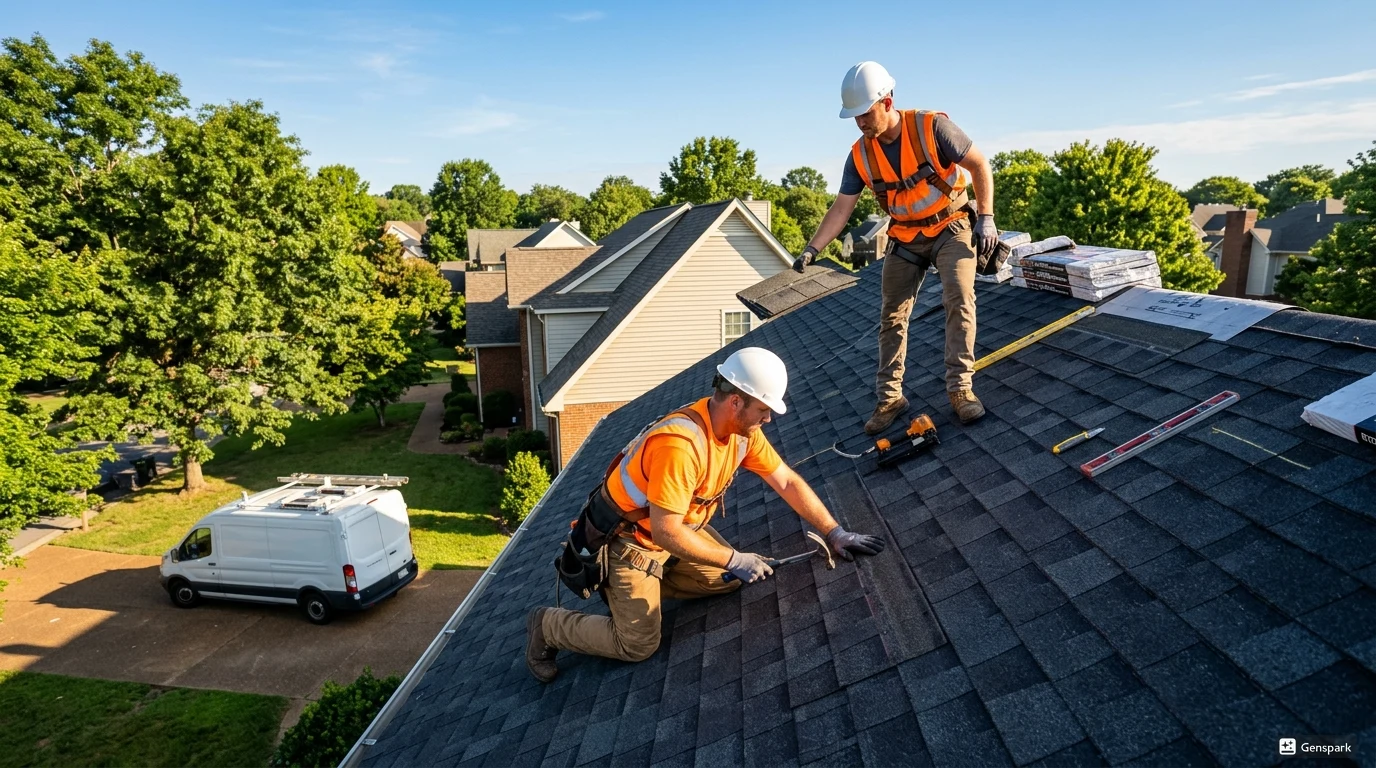
A sagging roof is a structural emergency. It means your roof deck or rafters are failing. It could collapse. Do not ignore it. Do not wait. We have seen homeowners ignore a small sag for years, only to have the roof collapse during a heavy snow. That is a disaster.
We have been xing sagging roofs in Clarksville since 2003. We have seen rafters cracked from age. Decking rotted from leaks. Trusses damaged from storms. We have also seen roofs that sagged because they had three layers of shingles (too much weight).
This article covers sagging roof repair in Clarksville. What causes it. How we fix it. And what to do if you see it. Call (931) 666-1469 immediately.
What Causes a Roof to Sag in Clarksville?
Let us list the common causes. We see all of them in Montgomery County.
Rotted decking. The plywood or OSB under your shingles absorbs moisture from a leak. It softens. It loses strength. The weight of the shingles and snow causes it to sag. This is the most common cause we see. Often the homeowner had no idea there was a leak because the water was traveling along a rafter and dripping somewhere else.
Rafter damage. The 2x4 or 2x6 rafters that hold up your decking can crack or rot. A leak that runs down a rafter can rot it from the end. A tree impact can crack it. A rafter that is undersized for the roof load can bow over time. Older homes (pre-1970) sometimes have undersized rafters.
Truss failure. Engineered trusses are strong but not indestructible. A severe storm, a tree impact, or improper modifications (cutting a truss to install a skylight or attic access) can cause failure. Never cut a truss. If you need attic space, consult an engineer.
Too many layers. Some old roofs have three or more layers of shingles. Each layer adds 200-300 pounds per square (100 sq ft). A 2,000 sq ft roof with three layers has an extra 12,000 pounds of weight. The decking was not designed for that. It sags.
Snow and ice. Heavy snow or ice buildup adds weight. Clarksville does not get heavy snow often. But when we do (like the 2021 winter storm), it is wet and heavy. Wet snow can weigh 20 lbs per cubic foot. Six inches of wet snow over 2,000 sq ft is 20,000 lbs. That can push a weakened roof over the edge.
Fort Campbell families, if you live in base housing and see a sag, report it immediately. The housing office will prioritize structural issues.
How We Fix a Sagging Roof (Step by Step)
This is not a DIY repair. Do not attempt it. Here is our process.
the sag with a string level. We look for the cause. We take photos.
recommend staying out of that part of the house. Do not put weight on the roof. Do not store items in that area of the attic.
- Remove shingles. We strip the shingles from the sagging area to expose the decking.
This is done carefully to avoid further damage.
We dispose of the rotted wood.
bowing. We use a ashlight and a probe. If a rafter is damaged, we sister it (attach a new rafter next to the old one). Sistering involves nailing a new 2x6 or 2x8 alongside the old one for the full length. This strengthens the structure.
- Jack the sag (if needed). For severe sags, we use a hydraulic jack and a beam to push
the roof back into position before sistering. This is a structural repair. We work slowly to avoid cracking the drywall below.
- Install new decking. We nail new plywood or OSB over the repaired rafters. We use 1/2inch CDX plywood (stronger than OSB). We nail every 6 inches on edges.
- Re-roof the section. New underlayment, ice shield, and shingles. We match the existing
shingles as closely as possible.
check the entire roof. We also check the attic for other signs of rot.
what we repaired. We also provide photos. Keep this for your records.
Sagging roofs are dangerous. You need a roofer who understands structural loads. We do. We also work with structural engineers when needed. If the damage is extensive, we can refer you to a licensed engineer for a full assessment.
We also have the equipment. Hydraulic jacks. Sistering materials. Safety gear. We do not guess. We repair properly.
For Fort Campbell families, we coordinate with the base housing office for structural repairs on base. We have done this many times.
Frequently Asked Questions
How much does sagging roof repair cost in Clarksville?
Minor sag (replacing a few sheets of decking and sistering one rafter): depends on your specific roof to varies based on scope and materials. Major sag (multiple rafters, jacking): varies by project size and complexity to is project-dependent — contact us for a free estimate. Full roof replacement may be needed if the damage is widespread. We give you a written estimate before starting.
Can a sagging roof collapse?
Yes. A sag indicates structural weakness. In heavy snow or a storm, it could collapse. Do not ignore it. Do not store heavy items in the attic under the sag.
Does insurance cover sagging roof repair?
If the sag was caused by a covered peril (storm damage, tree impact), yes. If it was caused by age, neglect, or poor workmanship (too many layers), no. We help document the cause.
How long does a sagging roof repair take?
Depends on the size and complexity. Most repairs take one day. Full replacements run one to three days. We give you a realistic timeline in writing before we start, and we stick to it.
A: One to three days, depending on the extent. Structural repairs take longer than simple shingle replacement. We will give you a timeline.
Can I walk on a sagging roof?
No. Stay o it. You could fall through. Keep your family out of that area of the house. Do not put ladders against that part of the roof.
How do I prevent my roof from sagging?
Fix leaks immediately. Do not add multiple layers of shingles (Montgomery County code allows only two layers, but we recommend tear-o at one layer). Keep your attic well-ventilated to prevent rot. Get regular inspections.
Ready for a free estimate from a licensed Clarksville roofer?
Call (931) 666-1469